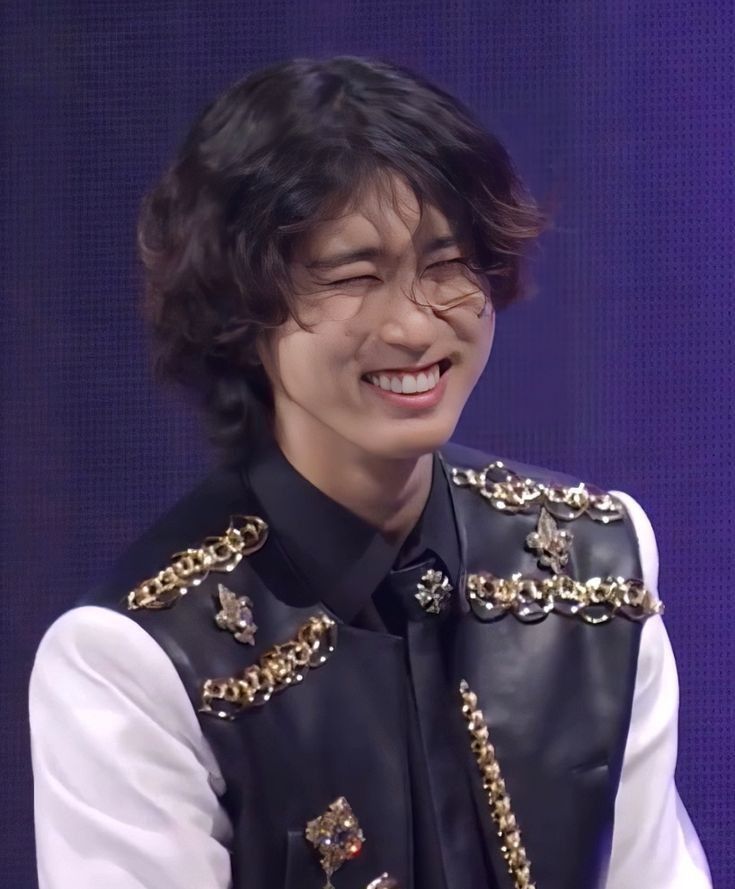
안녕하세요 여러분!!! Welcome to the final part of my Attempt at becoming a linguist series!!!
Today, I’m thoroughly excited about this post because I understand more of the grammar for Korean than I do Japanese and can (hopefully) break down the phrases for comprehension.
Korean is the third language to capture my heart and take over my world. Even though it’s similar to Japanese in many aspects, it’s still quite a difficult language for me to learn and study.
Is that going to stop me though? Absolutely tf not.
Let’s go into some background of why Korean is the third language to capture my heart.
My Korean Love Story
It all started when my best friend at the time showed me the music video for Got7’s Just Right. It was a great music video and the song was just as great. Unfortunately, I was handling a lot of issues of my own, so it got pushed to the back of my mind.
Then, one day, the memory resurfaced and I desperately wanted to find that song again. Problem was, the only thing I could remember was the music video. You wanna know what I typed into Google to find it?
Tiny people dancing in cereal.
It worked!!! I found the music video and immediately added the song to my Spotify so I could listen to it all the time. I know you’re expecting the first K-Pop group I got into to be Got7…but it wasn’t.
It was EXO. I have no idea why it wasn’t Got7 and have no idea how I got lead to EXO in the first place. I just know that I didn’t want to get into BTS first because something felt cliche about that. So, I got into EXO.
Then, I saw Jimin. And I felt something in my soul tell me to learn the members of BTS. So, that’s exactly what I did, had the mindset of “I just want to learn the members’ names“.
…
Yeah, everybody into K-Pop knows how that goes. The next thing I knew, I was watching BTS videos at 3 AM when I had to wake up for school at 6 AM.
I was into BTS for YEARS, just stanning them and not wanting to get into any other groups. My attraction to BTS was so grand, I forgot I was into EXO.
I’m ashamed.
Deeply ashamed.
I am so sorry EXO.
I finally came back to EXO when I got into TXT and ATEEZ. TXT was the second group BigHit (the company BTS and TXT are under) and ARMYs (BTS fanbase) were calling them BTS’s little brothers. Of course I had to stan. And for ATEEZ, I saw Hongjoong and he looked like a fairy and the next thing I knew, I was in this BREAK THE WALL shit for life.
Anyway, I could go on and on about my love for K-Pop, but that’s not what this post is about. I’m supposed to be teaching Korean, so here we go. Let’s get into some common words and phrases.
Common Koreans Words and Phrases
*remember the romanization is not the way you need to learn. I just an providing you a way to read the symbols without having to learn Hangul real quick
- 안녕하세요 (annyeonghaseyo)
- 저는…입니다/이예요/예요 (jeoneun…imnida/iyeyo/yeyo)
- 사랑해요 (saranghaeyo)
- 고마워요/고맙습니다/감사합니다/감사해요 (gomawoyo/gomapsemnida/kamsahamnida/kamsahaeyo)
- 미안해/미안해요/죄송해요/죄송합니다 (mianhae/mianhaeyo/jwesonghaeyo/jwesonghamnida)
- 실례합니다 (sillyehamnida)
- 안녕히 가세요/안녕히 계세요 (annyeonghi gaseyo/annyeonghi gyeseyo)
- 좋아해요 (joahaeyo)
- 오빠/누나/언니/형 (oppa/noona/unnie/hyung)
- 어떻게 (eoddeoge)
안녕하세요 (annyeonghaseyo)
This is the most basic and appropriate greeting in Korea. This is how you will say “hello/good morning” in informal polite form. There are different formalities built into the language like with Japanese, but for times sake, I will only discuss informal polite, informal, and formal forms for some words.
While there is some grammar built into this word, I’m not the most knowledgeable about the grammar yet, so I can’t tell you the story behind it just yet.
Just know that you are guaranteed to hear this word if you go to Korea or consume Korean content multiple times. A lot of the time, a slight bow is also appropriate while saying this word.
저는…입니다/이예요/예요 (jeoneun…imnida/iyeyo/yeyo)
This is the most basic way to introduce who you are in Korean. Depending on situation and whether your name ends in a consonant or a vowel determines what ending you would use.
If you’re in a formal situation, you would use the 저는…입니다 format where your name goes where the ellipses are. If you are in an informal situation or meeting someone around your age, you can use the other two endings.
Here’s where the consonant/vowel situation comes into play (there are a lot of these in Korean). If your name ends with a Korean consonant, you would use the 이예요 ending where 입니다 is. Korean vowel endings will result in you using the 예요 ending.
This is sort of important to keep in mind, but don’t stress about it too much. This phrase translates to, “I am…” or “I am called…”
사랑해요 (saranghaeyo)
If you have ever watched a K-drama, listened to K-Pop, or engaged in any Korean media, you have probably heard how to say, “I love you”.
I added the 요 at the end as a formality, but most of the time (at least in my experience), people are close enough to just say 사랑해 with no problem.
This is one of the first words I learnt in Korean just because it was said so much. The K-Pop groups I listen to and the K-dramas I watch are often so filled with love that they can’t help but say this word.
So, if you have a significant other whose is either Korean or into Korean culture, why not switch up the usual English (or whatever language you speak) and add some flavor to your love (I’m sure they would appreciate the effort).
This phrase literally means, “I have love for you”, and there’s nothing more romantic than that.
고마워요/고맙습니다/감사합니다/감사해요 (gomawoyo/gomapsemnida/kamsahamnida/kamsahaeyo)
I know this looks a bit complicated, but I promise you it’s not. These words are various ways of saying, “Thank you” in Korean.
Personally, I’m not too sure about the difference between using 고마워요 vs. 감사해요, but I think the difference is a slight degree of formality. 감사해요 is slightly more formal than 고마워요, but Koreans tend to use these terms interchangeably.
However, if you are in a formal situation, I would personally suggest you use 감사합니다 in those situations. 고맙습니다 might also be acceptable, but I haven’t heard this word used as often as 감사합니다 in formal situations, especially if you aren’t familiar with the people you are talking to.
Maybe that’s the difference between the two forms? Relational closeness? Don’t quote me on this, lmao.
미안해/미안해요/죄송해요/죄송합니다 (mianhae/mianhaeyo/jwesonghaeyo/jwesonghamnida)
Here’s another one you may want to hang in there with me on. These are various ways to say, “I’m sorry” in Korean.
Once again, formality and adding a personal touch can determine which word you want to use.
If you mess up badly, I personally would suggest using 죄송합니다 because, in my mind, it’s at the top of the list of formality and really shows that you are apologetic for your actions.
After that, 죄송해요 would be next. However, if you want to add a more sincere and personal touch to the apology, I would recommend 미안해/미안해요. The difference between using 죄송해요 vs. 미안해요 is a bit more prominent here than for the thank yous.
실례합니다 (shillyehamnida)
Oh boy.
I don’t know if I’m about to explain this word horribly wrong or confidently right, but we’re going to make an attempt.
The way this was taught to me, you say 실례합니다 when you want to say “excuse me” but not the kind of excuse me you use when walking past or around someone. Not even the kind of excuse me to get someone attention.
This “excuse me” is strictly for when you’re about to say something rude, controversial, or blunt to the person you are speaking to. However, as previously mentioned, don’t quote me on this.
If you want a real-life example for how to use the word, I would recommend listening to Nxde by i-dle. Soyeon uses the word in her verse after the first chorus during her rap. Really, the entirety of Nxde is a good example for the use of this word and the attitude/feelings behind it.
안녕히 가세요/안녕히 계세요 (annyeonghi gaseyo/annyeonghi gyeseyo)
Ah yes, where we learn to say “hello”, we must also know how to say goodbye. In Korean, there are two main ways to announce the departure of someone depending on who is leaving.
I personally always get these two mixed up, but I will have it right for this post.
안녕히 가세요 is used when you are staying and the other person is going. You can remember this by remembering that 가 means “go”, a literal way to tell someone “go with peace”.
안녕히 계세요 is used when you are leaving and the other person is staying. I don’t have a way for you to remember this one, but if you can remember the other one, you’ve got it. This phrase literally means, “stay in peace”.
좋아해요 (joahaeyo)
We’re getting down to the last few phrases y’all, so hang tight.
This word means “I like it/you/whatever you’re talking about”. This is the cousin to 사랑해요, kind of a middle ground if you aren’t quite at that stage yet with someone or if you simply don’t want you say you love something.
Sometimes liking something can be more meaningful than loving something and this word is perfect for expressing these feelings.
오빠/누나/언니/형 (oppa/noona/unnie/hyung)
Hang in there, we’re almost done.
These words are how you would address someone who is older than you in Korean. These words can be the equivalent of calling someone by their name or calling someone “brother” or “sister”.
If you identify as a man or boy, to an older man, you would address them as “형”. To an older woman, you would address them as “누나”.
If you identify as a woman or girl, to an older man, you would address them as “오빠”. To an older woman, you would address them as “언니”.
This is to mean someone slightly older or within a similar age bracket as you. If they are an aunt, uncle, or someone way older than you, there are other words you would address them as that we are not going to discuss in this post today.
어떻게 (eoddeoge)
And here we are at the last word folks!!!
This word can be used in a variety of ways to mean a variety of things, but at its core, it means “how”. Every time you see this word, it will mean something along the lines of “how”.
Now, be careful not to confuse this word with 어떡해 which means “what should I do?” (something I fairly recently learnt because they sound similar in my mind).
It’s been my experience to hear this word a lot in native Korean speaking, so I thought I should include it as a common word you would hear in Korean.
~~~
AAAAAAANNNNNNNNDDDDDDDD that is it folks!!!
This is the epic conclusion to my “Attempt at becoming a linguist” series (unless I decide to pick up another language which knowing me is highly likely).
My apologies for this post coming out so late. I lost ambition for a while to continue the series because of all the copying and pasting I had to do because I don’t have the various language keyboards on my laptop.
Thank God for my phone thought because it really came in clutch.
Anyway, thanks for tuning into another blog post and I hope you are feeling great this time of the year.
Feel free to leave a comment to tell me what you thought about the series or even if I mis-explained something.
Until next time!!!

 Moon's Creative Corner
Leave a comment